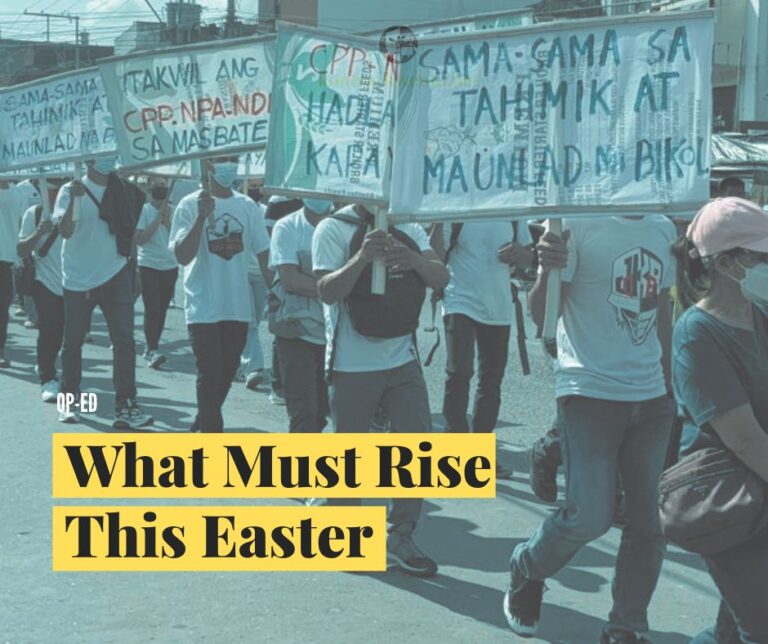
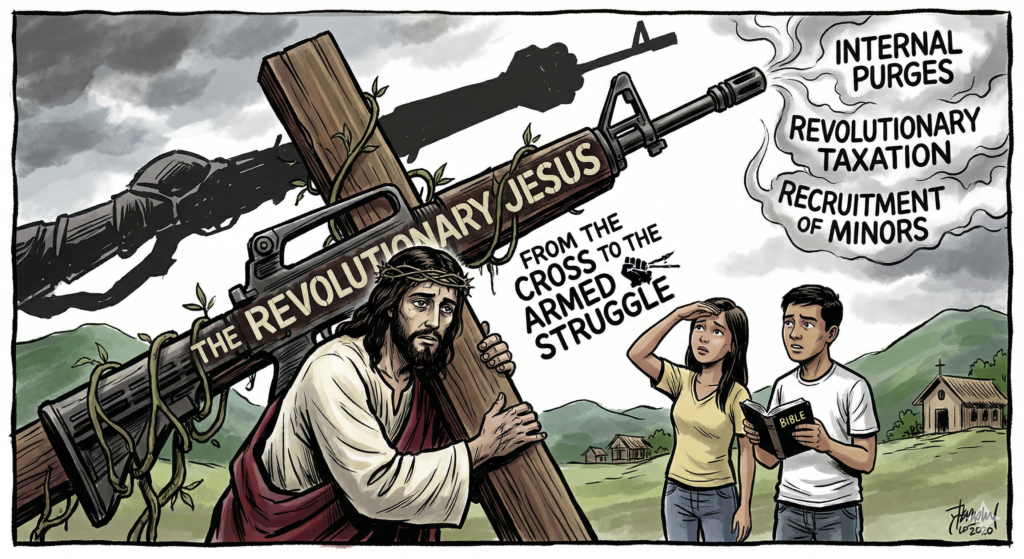
The Lenten season is more than a religious holiday; it is a shared language of sacrifice and renewal. However, the recent statement from the Communist Party of the Philippines (CPP), “The Revolutionary Jesus: From the Cross to the Rising of a People,” attempts to translate this sacred language into a call for continued conflict.
The comparison of a revolutionary Christ to an armed movement can feel compelling. But when we look closer, we see a strategic attempt to turn faith into a tool for violent mobilization.
The Strategy of Alignment
The statement attempts to bridge the gap between a deeply religious culture and a political ideology that has historically been secular. By framing the “People’s War” as a modern-day Calvary, the movement seeks to lower the moral barrier to violence. The message is subtle but clear: if the struggle is holy, then the rifle is a tool of faith.
In this narrative, “Resurrection” is not a spiritual victory over death. Instead, it is used as a code for the recovery of lost guerrilla fronts and the start of a new recruitment cycle. They aren’t celebrating a miracle of life; they are celebrating the persistence of a war.
The teachings of Christ, at their core, center on the sanctity of life and the transformation of society through peace. Historically, the most lasting changes in our country have come from non-violent, community-led movements—the teachers, the cooperatives, and the local leaders who build without destroying.
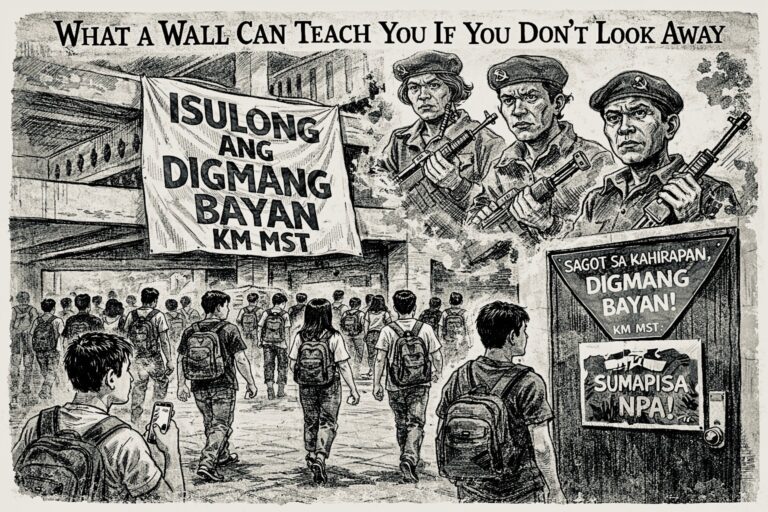
In contrast, the reality of the “armed struggle” in our rural barangays has always been more about survival than salvation. It is felt in the quiet dread of a small-scale farmer forced to hand over his meager earnings as “revolutionary tax” before he can even buy next month’s seeds. It is remembered in the shattered trust of families who lost loved ones not to an enemy, but to the movement’s own “purges” born of internal suspicion. Most tragically, it is seen in the empty desks in our mountain schools, where children are traded for recruits and ushered into a life in the shadows before they even understand the war they are being asked to fight.
A Call for Discernment
The desire to stand with the poor is a noble one. But it is important to remember that being “pro-poor” does not have to mean being “pro-war.” Seeking justice for the marginalized does not require swearing allegiance to an armed movement that has outlived its own promises of victory.
The “Revolutionary Jesus” presented in these slogans is a simplified version of a complex faith. It is a narrative that demands more sacrifice from the people of Mindanao while offering a future that remains stuck in the past.
This Easter, let us look for a resurrection that brings actual life to our communities—not a narrative that asks for more death in the name of a cross that was never meant to be a weapon against our own neighboors.
About the Author